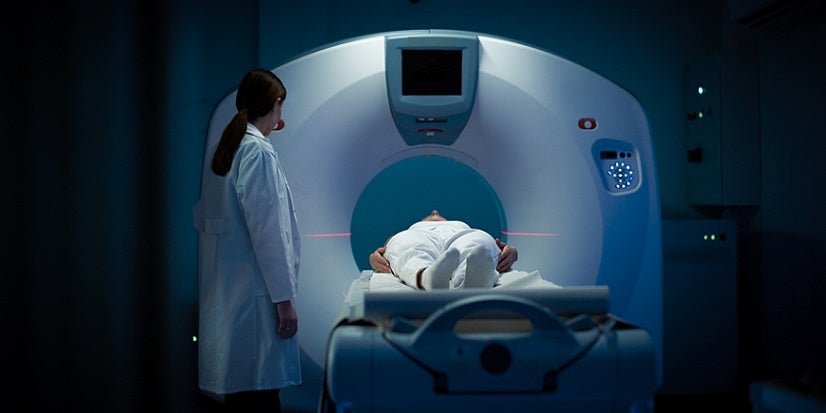
As the number of people taking GLP-1 medications continues to skyrocket, new questions about their impact keep popping up. Doctors are learning that they can sometimes affect medical imaging like MRIs, CT scans, or ultrasounds. Here’s what you need to know.
GLP-1 medications help your body use insulin more effectively and slow down how quickly food leaves your stomach. (that slow-down is one reason they work so well for weight loss) But when your stomach empties more slowly, food or fluid may still be hanging around even after you’ve followed fasting instructions. That could change what your imaging team sees:
- For abdominal ultrasounds or MRIs: A “full” stomach can make it harder to see organs like the pancreas, liver, or gallbladder clearly.
- For an endoscopy or MRI that requires anesthesia or sedation: Extra food in the stomach can raise the risk of aspiration, which is when stomach contents move into the lungs.
- For cancer imaging (like PET or CT scans): New research finds that GLP-1s could affect a particular type of scan for cancer patients called a fluorodeoxyglucose, or FDG, PET scan, making it harder to interpret the results and even mimicking the presence of cancer.
If you’re taking a GLP-1 and have an upcoming scan or procedure:
- Tell your care team that you’re taking a GLP-1 medication.
- Ask about prep instructions. Fasting guidelines might differ depending on your medication.
- Don’t skip doses on your own. Always talk with the doctor who prescribed your GLP-1 before pausing or changing your schedule.
GLP-1 medications can be game-changers for diabetes and weight management, but they can also subtly influence imaging results. A quick heads-up to your provider helps ensure your results are clear, your care is coordinated, and your safety comes first.