


Man, It's Hot in Here!
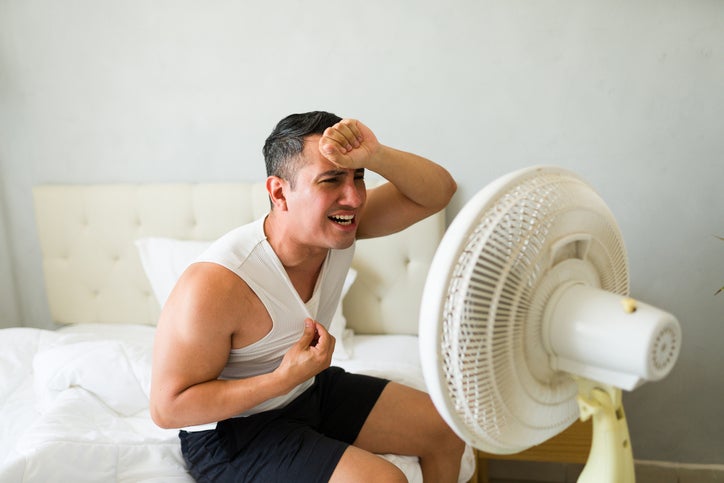
We’ve all had those moments: waking up confused, kicking off the blankets, changing pajamas, and wondering why your bedroom suddenly feels like a sauna. Night sweats affect nearly 45% of adults at some point, and while both men and women experience those middle-of-the-night wakeups drenched in sweat, the reasons behind them can look a little different.
Hot flashes and night sweats in women are often associated with hormonal changes, especially during menopause and the transition leading up to it. While it may not be talked about as much, men can experience night sweats too and understanding what’s causing the excessive sweating can help you find ways to manage it. Though less common in general, night sweats may become more noticeable between the ages of 40 and 55. Here are some of the most common reasons men experience night sweats:
Low Testosterone. One of the most common causes of night sweats in men is low testosterone, sometimes called “Low T.” As men age, testosterone levels naturally decline. When levels drop, the body’s internal temperature regulation system can become more sensitive. Lower testosterone can essentially confuse the body’s thermostat, causing it to react as if it’s overheating, leading to sweating, sudden warmth and disrupted sleep.
If night sweats are paired with symptoms like fatigue, mood changes, reduced muscle mass or changes in libido, it may be worth talking to your doctor about whether testosterone levels should be checked.
GERD. You may not immediately connect acid reflux with sweating, but gastroesophageal reflux disease (GERD) can play a role in nighttime discomfort. GERD happens when stomach acid flows back into the esophagus, often causing heartburn, chest discomfort, coughing or a sour taste in the mouth. For some people, these nighttime episodes can trigger the body’s stress response and that can come with sweating.
Men and women can both experience GERD, but it is more commonly reported in men. Simple changes like avoiding large meals close to bedtime, limiting trigger foods and elevating the head while sleeping may help reduce nighttime symptoms.
Stress and anxiety. Stress doesn’t just affect you during the day, it can follow you to bed. When you’re stressed or anxious, your body releases hormones like adrenaline and cortisol that prepare you to respond to a challenge. That “fight-or-flight” response can increase heart rate, raise body temperature and cause sweating, even while you’re trying to rest. Chronic stress can also make it harder to get quality sleep, creating a cycle where poor sleep leads to more stress.
While you can’t control every cause of night sweats, a few small changes can help you stay cooler and sleep more comfortably:
Set the right bedroom temperature. The ideal sleeping temperature for most adults is around 60-67 degrees Fahrenheit. A cooler room helps your body naturally lower its temperature as part of the sleep process.
Choose breathable bedding. Swap heavy blankets and synthetic fabrics for lightweight, breathable materials like cotton, bamboo or linen. Your mattress and pillow can also trap heat, so look for cooling options if you tend to sleep warm.
The outfit matters. Loose-fitting, moisture-wicking pajamas can help keep sweat from lingering and waking you up.
Watch late-night meals and drinks. Spicy foods, alcohol, caffeine and heavy meals close to bedtime can raise body temperature or worsen reflux symptoms.
Create a wind-down routine. A few minutes of stretching, reading, deep breathing or unplugging from screens before bed can signal to your body that it’s time to relax.
Stay hydrated. Sweating overnight can lead to fluid loss, so make sure you’re drinking enough water throughout the day.
Night sweats are common, but they don’t have to become part of your nightly routine. If they happen often, interrupt your sleep or come with other symptoms, it’s a good idea to talk with your doctor to uncover the cause. Because a good night’s sleep shouldn’t require a midnight wardrobe change.