
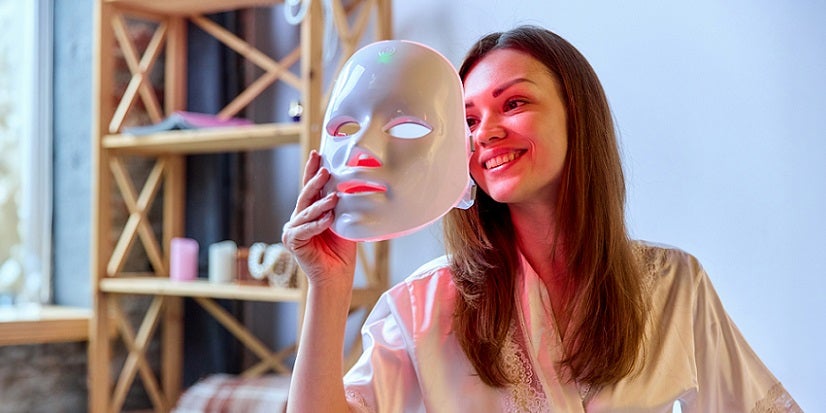
For many years, red light therapy has been used for skin healing abilities but at-home versions have joined the picture as a relaxing and therapeutic experience to add to your skincare routine. But, if you don’t have the correct red-light mask, you might never see any positive change, so let’s shine a (red) light on what you need to know.
Red light therapy, also known as photo biomodulation, uses a low power setting of red or near-infrared light to trigger changes inside your cells, targeting an enzyme in your mitochondria called cytochrome c oxidase. When this enzyme meets the nitric oxide your body naturally produces, the process slows down, allowing the red-light therapy to knock the nitric oxide loose. This helps restore the cell’s energy levels, which increases the cell’s output of ATP (adenosine triphosphate). ATP is the molecule your cells use as fuel, so when this is boosted, there’s an increase in energy production.
Lab studies have confirmed that cells treated with near-infrared light have increased energy production, which leads to positive influences on inflammation, tissue repair, and cell survival. The production of energy in your skin cells allows them to grow and thrive, promoting hair growth, chronic pain support, and skin aging. So, while the therapy itself is proven to work, not all red-light therapy is created equally. The market is highly saturated with overpriced devices or devices not strong enough to do what they promise.
A red-light mask needs to have a wavelength of 600-900 nanometers to penetrate the skin enough to effectively treat issues. Most face masks under $50 will not emit light at a strong enough rate. “Red LED” with no range of nanometers listed means it is probably not effective and a waste of money.
Some red-light masks may come programmed with other colored lights. Lights like blue light help to combat acne-causing bacteria. Amber lights promote a healthy glow and help wake up tired skin. The same goes for these colors – they're only effective if used at the right wavelength. Blue light needs to have a 460-480nm range to make a difference. Amber light requires a bit stronger range of 570-620nm.
In addition to different colored lights, there are other types of red-light therapy products besides the popular face masks. You may have seen handheld devices that you can use on areas of the body you want to target, not just on the face. And then there are red-light panels that you can sit or stand in front of, or lay next to. You can even find full body beds that can target and treat the entire body.
Regardless of the type of red-light device, it’s important to make sure your skin can tolerate the light emitted. Start with 2-3 sessions a week for 10-15 minutes each and slowly increase that number if your skin continues to tolerate the light. If you notice any persistent redness, swelling or pain, or dryness or a rash, you should stop any red-light therapy. If your skin can tolerate the light and you have no visible issues, consistency will be the key to seeing clear changes with your skin.
Red-light therapy is safe for most people, but if you have retinal disease or eye damage including corneal injuries, abrasions, cataracts or eyelid tears, you should avoid any red-light therapy near the eyes. You should also avoid red light therapy if you have or have ever had skin cancer. Be careful if you are on medications that cause your skin to be more reactive to UV radiation, as red-light therapy may cause adverse reactions.
Red-light therapy is a great way, when used consistently, to help heal imperfections, treat pain, and promote growth, but know that any noticeable changes will happen over time, not immediately. If a red-light therapy mask is too far out of your budget or intimidating, safe sun exposure is a great way to support skin health and recovery.
At the end of the day, your skin health is incredibly important, and this is a great, non-invasive, way to support growth and healing.